Show us some love
Tails raised with pride

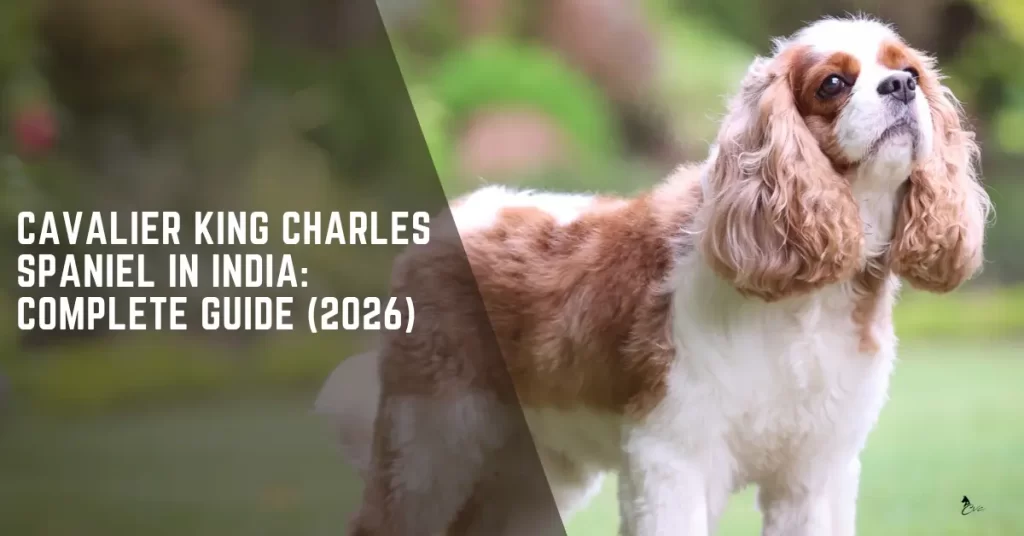
If you are looking for a gentle, affectionate companion dog that fits well into an Indian apartment, the Cavalier King Charles Spaniel is one of the most loved toy breeds in the world. These dogs are known for their soft expressions, silky coats, and a deep need to be close to their people. But they also come with real challenges for Indian owners, including heat sensitivity, high grooming needs in humid weather, and inherited heart problems that every buyer should understand before bringing a puppy home.
This guide covers everything you need to know about the Cavalier King Charles Spaniel in India: temperament, health, climate, grooming, training, cost, and how to find a responsible breeder.
| Trait | Details |
| Height | 12 to 13 inches (30 to 33 cm) |
| Weight | 5.9 to 8.2 kg |
| Lifespan | 9 to 14 years |
| Coat | Long, silky, moderate shedding |
| Energy level | Moderate |
| Good for apartments | Yes |
| Heat tolerance | Low |
| Good with kids | Yes |
| Group | Toy |
The Cavalier traces back to small toy spaniels kept by European royalty in the 16th and 17th centuries. The breed is named after King Charles II of England, who famously kept these dogs close at all times. Over the years, breeders developed a flatter-faced version, which became the King Charles Spaniel. In the 1920s, an American named Roswell Eldridge offered a prize for spaniels that looked like the older, longer-nosed type seen in old paintings. That effort led to the modern Cavalier King Charles Spaniel, which gained recognition as a separate breed in the following decades.
Though they share a name, these are two separate breeds. The King Charles Spaniel (also called the English Toy Spaniel) has a shorter, flatter face and a domed head. The Cavalier has a longer muzzle, a flatter skull, and is slightly larger. In India, almost all dogs sold under either name are Cavaliers.

Cavaliers are small, elegant dogs with large dark eyes, long feathered ears, and a silky coat. They have a sweet, melting expression that is a big part of the breed’s charm. They come in four recognised colours:
Blenheim and Tricolour are the most commonly seen in India. Be cautious of any seller advertising “rare” or “exotic” colours at a premium. This is a common sales tactic and has no connection to health or quality.
Temperament is the reason most people fall in love with this breed. Cavaliers are affectionate, gentle, and eager to please. They are often described as “velcro dogs” because they want to be near you at all times, whether that means sitting on your lap, following you from room to room, or sleeping on your bed.
Are Cavaliers good family dogs? Yes. They are among the best small breeds for families. They are patient with children, friendly with guests, and usually get along well with other pets. Their gentle nature also makes them a lovely companion for senior citizens. As with any breed, young children should be taught to handle a small dog carefully.
Do Cavaliers bark a lot? Not usually. They may bark to announce a visitor or a delivery, but they are not known as nuisance barkers. This is a plus if you live in a society with noise rules.
Separation anxiety is the main behavioural downside. Because Cavaliers bond so deeply, they struggle when left alone for long hours. If everyone in your home works full time, think carefully before choosing this breed. Gradual alone-time training, a family member working from home, or a trusted caregiver can help.
Cavaliers are also spaniels at heart, which means they have a mild hunting instinct. They may chase birds, squirrels, or cats, so a leash is a must outside.
This is the question Indian buyers should ask before any other. The honest answer: Cavaliers can live in India, but they need careful management. They were bred for the cool, mild climate of the UK. Long coats, a slightly short muzzle, and a small body make them prone to overheating in heat and humidity, especially in cities like Kolkata, Chennai, Mumbai, Delhi, and Hyderabad.
Heavy panting that does not settle, drooling, red gums, weakness, vomiting, or collapse. This is an emergency. Move the dog to a cool place, wet the body with cool (not ice cold) water, and go to a vet immediately.
If you live in an area with very hot summers and cannot provide cooling, a breed better suited to heat may be a kinder choice.
This is the most important section of this guide. Cavaliers are lovable, but they are also one of the breeds with the most serious inherited health concerns. Knowing this in advance helps you choose a healthy puppy and prepare for the future.
Mitral valve disease is a heart condition where the valve between two chambers of the heart weakens and leaks. It is extremely common in Cavaliers, and many develop a heart murmur by middle age. It often starts earlier in Cavaliers than in other breeds. Some dogs live many years with mild disease, while others progress to heart failure. Medication can slow progression, so regular heart checks with a vet are important, ideally starting by age 1 to 2 and continuing yearly.
In this condition, the skull is too small for the brain, which can cause fluid-filled pockets near the spinal cord. Signs include scratching at the neck or shoulder without making contact, yelping for no clear reason, sensitivity around the head and neck, and in severe cases, weakness. Diagnosis requires an MRI. It is a big reason why parent health screening matters.
You cannot remove genetic risk entirely, but you can lower it. Choose a breeder who health tests their breeding dogs, schedule regular vet visits, keep your dog at a healthy weight, and consider pet insurance if available to you. Ask your vet about baseline heart screening early in life.
The average Cavalier lifespan is 9 to 14 years. Dogs from health-tested parents, kept at a healthy weight and monitored for heart disease, tend to live toward the upper end of that range. Dogs from poorly bred lines may be affected by heart disease or neurological problems earlier. Good breeding, a balanced diet, controlled weight, regular vet care, and dental hygiene all support a longer life.
The silky coat is beautiful, but it needs regular care, especially in India’s humidity.
Cavaliers shed moderately and are not hypoallergenic. If anyone in your home has dog allergies, spend time with the breed before committing.
Cavaliers have moderate energy. A daily routine of two short walks (20 to 30 minutes each) plus indoor play is usually enough. Because of the heat, do the bulk of exercise in the cooler parts of the day. They enjoy fetch, gentle games, and puzzle toys.
Are Cavaliers easy to train? Yes. They are intelligent, eager to please, and respond well to treats and praise. Use positive reinforcement. Harsh methods do not work and can make a sensitive dog anxious.
Key training priorities:
Cavaliers are well suited to flat living because of their small size and calm indoor manners. A few practical points for Indian apartments:
Cavaliers love food and gain weight easily, and obesity worsens heart disease and joint problems. Feed measured portions and avoid free feeding.
Foods to avoid: chocolate, grapes and raisins, onions, garlic, macadamia nuts, anything containing xylitol, cooked bones, and very spicy or oily home food. Occasional plain boiled chicken, rice, or curd is generally fine, but regular leftovers from the family table are not a balanced diet. Always check with your vet before making big changes.
Choosing the right breeder is the most important decision you will make. Look for:
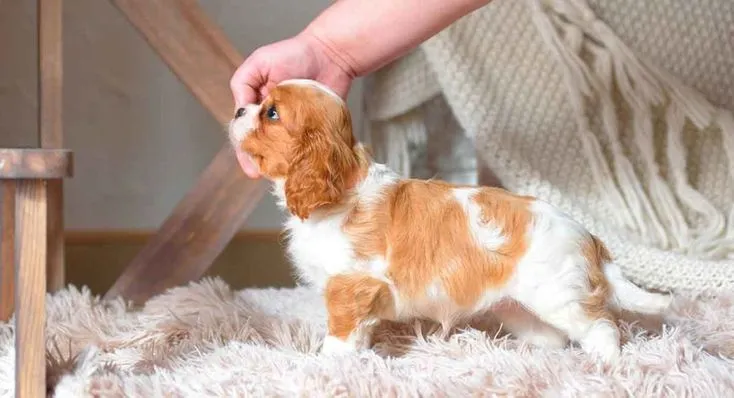
Adoption and rescue: Cavaliers occasionally appear in rescue or rehoming groups. It is worth checking breed-specific rescue pages and local animal welfare groups if you are open to an older dog.
Pros
Cons
A Cavalier is ideal if you are home often, can keep your dog cool, can budget for vet care, and want a gentle lap companion.
A Cavalier may not suit you if the house is empty most of the day, you cannot provide cooling in summer, or you want a rugged, high-energy dog.
Tails raised with pride
© Adjudicate Kennel. All rights reserved.