Show us some love
Tails raised with pride

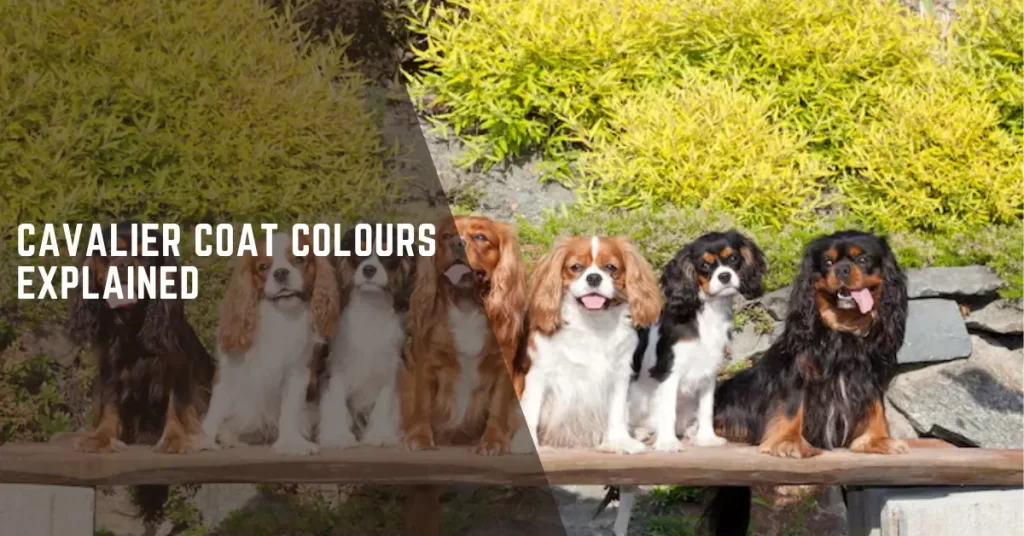
Cavalier King Charles Spaniel colours come in just four recognised varieties: Blenheim, Tricolour, Ruby, and Black & Tan. Each has its own markings, and each looks quite different in a puppy than it does in an adult. If you are comparing puppies, it helps to know what each colour should look like, what is normal as the coat develops, and which “colours” are really just sales talk.
This guide explains all four Cavalier coat colours, how the silky coat changes as your puppy grows, and what each colour means for grooming in India’s heat and monsoon.
Breed standards, including those of the Kennel Club in the UK and the American Kennel Club, recognise four colours:
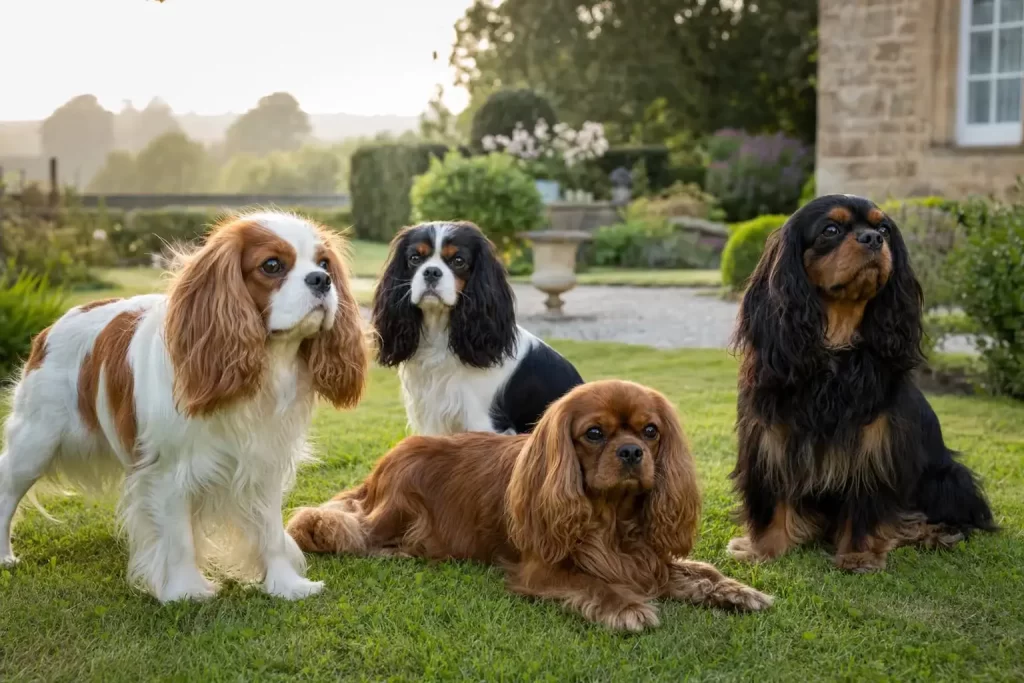
The first two are known as “parti-colours” because they are patterned with white. The last two are “whole-colours” because they carry no white on the body. In India, Blenheim and Tricolour are the most commonly seen, while Ruby and Black & Tan are less common.
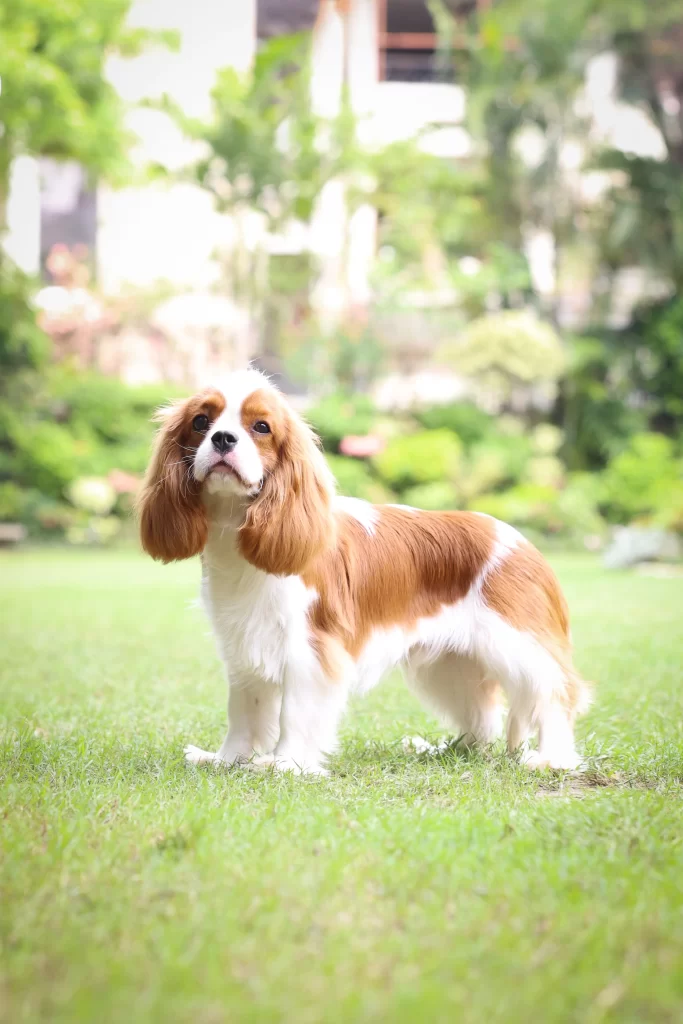
The Blenheim is the most recognisable Cavalier colour. It is a rich chestnut (reddish brown) on a pearly white background, with the chestnut patches spread evenly across the body and the ears.
The colour is named after Blenheim Palace, home of the Dukes of Marlborough, who kept and bred red and white spaniels in the 18th century.
Key markings:
The Blenheim spot is a much-loved feature, but it is not required. Many excellent Blenheims do not have one, and it has no connection to health or quality.
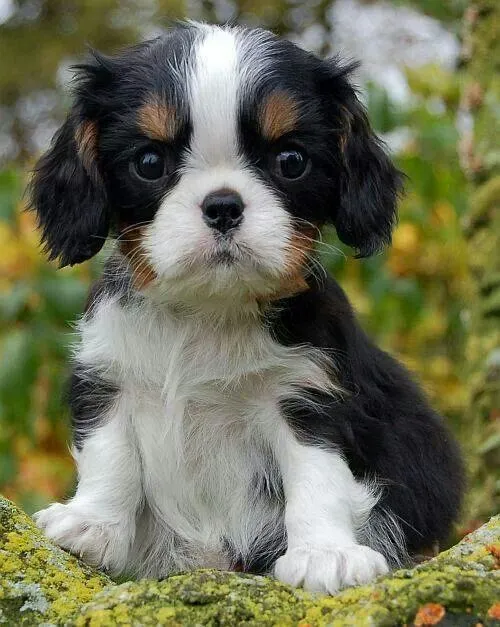
The Tricolour combines jet black and pearly white with rich tan markings. It is a striking, high-contrast colour and one of the most popular choices among Indian owners.
Key markings:
Tricolour puppies are born with their tan markings visible, so you can usually tell what you are getting from the first weeks.
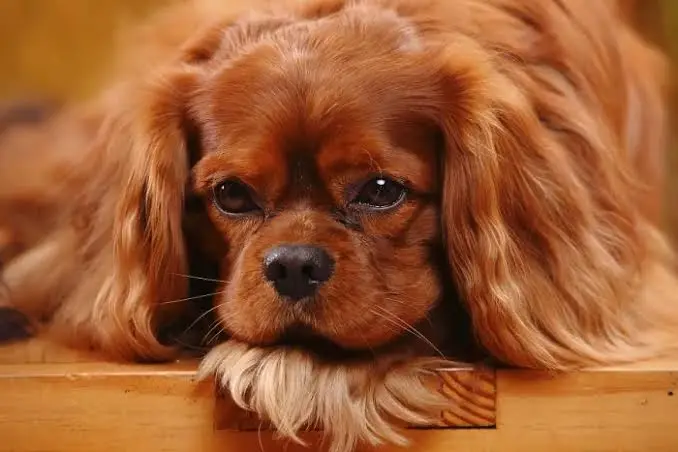
The Ruby is a solid, deep mahogany red from nose to tail, with no white markings. The colour should be rich and even. A sprinkling of white on the chest is sometimes seen but is considered a fault in the show ring, and a white patch elsewhere is usually a mismark. A mismarked Cavalier is just as healthy and lovable as any other, but the colour may not match the standard.
Ruby puppies often look darker and more reddish-brown as pups, and the colour can deepen or shift slightly as they mature. Because Ruby is a whole-colour, dirt and tear marks show less on the body than on white-patched dogs.
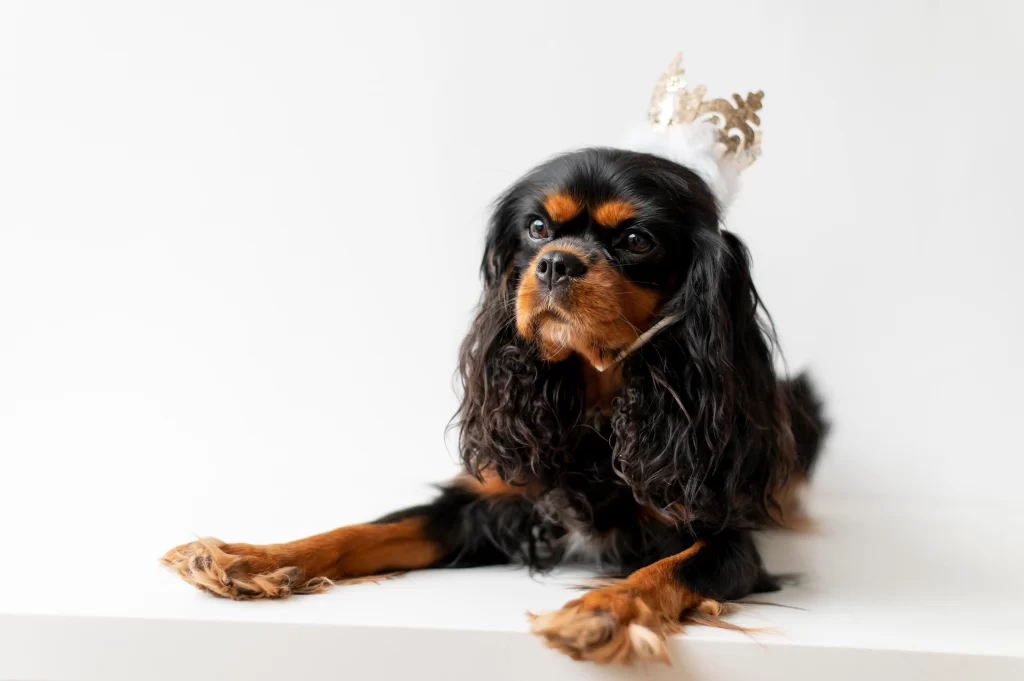
The Black & Tan is a glossy, jet black dog with bright tan markings. It is the least common of the four colours in India, and an eye-catching one.
Key markings:
White markings are not part of the standard for this colour. Black & Tans have a sleek, almost velvety look. In strong sun, black coats can fade slightly towards brown, so a little shade management helps maintain the shine.
| Colour | Base | Markings | Type | How common in India |
| Blenheim | White | Chestnut patches, often a forehead spot | Parti-colour | Very common |
| Tricolour | White | Black patches with tan points | Parti-colour | Common |
| Ruby | Solid red | None expected | Whole-colour | Less common |
| Black & Tan | Black | Tan points | Whole-colour | Least common |
The Cavalier coat is long, silky, and soft, with a slight wave allowed but no tight curl. It does not develop all at once, so a puppy’s coat tells you little about the adult look.
Owners are sometimes alarmed to see their puppy look scruffy around 8 to 10 months. This is normal and passes with regular brushing and patience.
No. The four Cavalier colours do not change a dog’s personality, trainability, or lifespan, and no colour is healthier than another. All Cavaliers can be affected by mitral valve disease, syringomyelia, and other inherited conditions, whatever their colour.
This is why parent health screening matters far more than colour when you choose a puppy. Choose the breeder and the puppy’s health first, and the colour second. Our complete Cavalier guide covers health testing and finding a responsible breeder in more detail.
If you are searching for Cavalier King Charles Spaniel colours online, you may see sellers advertising “rare”, “exotic”, “chocolate”, “sable”, “black and white”, or “golden” Cavaliers, sometimes at a much higher price. Treat these claims with caution.
A mismarked Cavalier can still be a wonderful pet, but it should be priced honestly and sold with full transparency about its parents.
Colour does not change how often a Cavalier needs brushing, but it changes what you notice, and India’s climate adds its own challenges.
With four recognised options, the best choice is the one you love, as long as the puppy is healthy. A few practical points:
Blenheim, Tricolour, Ruby, or Black & Tan, every Cavalier has the same gentle, affectionate nature under the coat. Pick the colour you love, but let the breeder’s health testing, the puppy’s condition, and your ability to care for the coat in India’s climate guide the final decision.
Disclaimer: This guide is for general information and does not replace professional veterinary advice.
Tails raised with pride
© Adjudicate Kennel. All rights reserved.