Show us some love
Tails raised with pride


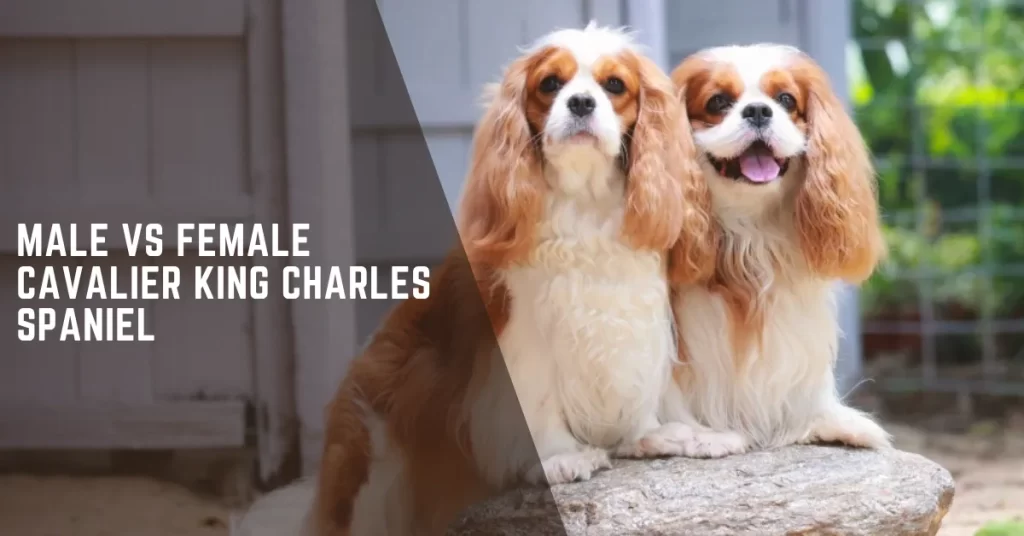
The difference between a male and a female Cavalier King Charles Spaniel is smaller than most people expect. Both sexes are gentle, affectionate, and eager to please, and the personality of the individual dog matters far more than whether it is a boy or a girl. Where the sexes do differ, it is mostly in modest size gaps and in reproductive care, which is worth planning for before you bring a puppy home.
This guide compares male vs female Cavalier King Charles Spaniels on size, temperament, health, reproductive care, with advice for Indian owners, and without leaning on stereotypes.
Either sex can make an excellent Cavalier. Males tend to be slightly bigger and females slightly daintier, but the overlap is large. Behavioural differences between the sexes are small and inconsistent, so you cannot reliably predict a puppy’s personality from its sex.
The biggest practical difference is reproductive care. Females have heat cycles unless spayed, and both sexes need a plan for sterilisation. If you choose the healthiest puppy from a responsible breeder and match its personality to your family, you are making the choice that matters most.
Slightly, on average. The breed standard describes the same height and weight range for both sexes, but in practice males often sit toward the upper end and females toward the lower end.
| Trait | Male | Female |
| Height | About 12 to 13 inches (30 to 33 cm) | About 12 to 13 inches (30 to 33 cm) |
| Weight | Often toward the heavier end of 5.9 to 8.2 kg | Often toward the lighter end of 5.9 to 8.2 kg |
| Build | A little broader in the chest and head | A little finer and more delicate |

These are tendencies, not rules. Plenty of females are heavier than males, and a Cavalier’s weight depends more on diet and exercise than on sex. Because the breed is prone to obesity, a healthy weight matters for both. Ask your vet to assess your dog’s body condition rather than relying on a number alone.
This is where most online advice falls into stereotypes: males are “clingier” and females are “more independent,” or the reverse. The honest answer is that such claims are not reliable for this breed.
Cavaliers as a group are known for being affectionate, social, and people-oriented, and both sexes share those traits. What varies far more is the individual dog, shaped by:
Some owners do report small trends, such as males being a little more playful or attention-seeking and females a little more reserved in new situations. Treat these as anecdotes, not predictions. A shy male and a boisterous female are both entirely normal.
The better question than “male or female?” is “which puppy in this litter suits our home?” A good breeder who has spent time with the puppies can tell you which is calmer, bolder, or more people-focused.
This is where the sexes truly differ, and where Indian owners should plan ahead.
The best timing is a decision for you and your vet, and there is ongoing research on how timing affects joints and long-term health. Many vets in India recommend sterilising small breeds somewhere between about 6 months and a year, with females often spayed before or after the first heat depending on the vet’s advice. Do not decide on your own: ask your vet about the right age for your dog.
If you are not a registered, experienced breeder with health-tested dogs, do not breed your Cavalier. The breed’s heart and neurological problems make responsible breeding a specialised job, and accidental litters add to the number of unwanted puppies.
Both sexes share the breed’s main inherited conditions: mitral valve disease (MVD), syringomyelia, dry eye, ear infections, and joint problems. Some research suggests male Cavaliers may develop mitral valve disease somewhat earlier than females, but females are affected too, so regular heart checks matter for every Cavalier.
The main health differences are linked to the reproductive system, as covered above: pyometra and mammary tumours in unspayed females, and testicular and prostate problems in intact males. Sterilisation reduces these risks, and your vet can explain the trade-offs for your individual dog.
Parent health screening matters far more than sex. Our complete Cavalier guide explains the heart and neurological tests to ask for when choosing a breeder.
In most cases, no. Reputable breeders usually price males and females the same. If a breeder charges more for one sex, ask why. Be wary of anyone charging extra for “breeding rights” or marketing a female as a “breeder” when you want a pet.
| Factor | Male | Female |
| Size | Slightly larger on average | Slightly smaller on average |
| Personality | Individual, no reliable difference | Individual, no reliable difference |
| Heat cycles | None | About twice a year if unspayed |
| Sterilisation | Neutering, simpler surgery | Spaying, larger surgery |
| Sterilisation cost in India | Lower | Higher |
| Main reproductive health risks if intact | Testicular and prostate problems | Pyometra and mammary tumours |
| Marking behaviour | More likely if intact | Less common |
| Price from a breeder | Usually the same | Usually the same |
Instead of choosing by sex alone, work through these steps:
When it comes to male vs female Cavalier King Charles Spaniels, the best choice is the healthy, well-bred puppy whose personality fits your family. Size differences are small, temperament is individual, and the real planning is about reproductive care, which you can handle with a good vet and a clear sterilisation plan.
Disclaimer: This guide is for general information and does not replace professional veterinary advice. Discuss the right age for spaying or neutering with your vet.
Tails raised with pride
© Adjudicate Kennel. All rights reserved.